Stakeholder Engagement Resource Hub

Share Stakeholder Engagement Resource Hub on Facebook Share Stakeholder Engagement Resource Hub on Twitter Share Stakeholder Engagement Resource Hub on Linkedin Email Stakeholder Engagement Resource Hub link

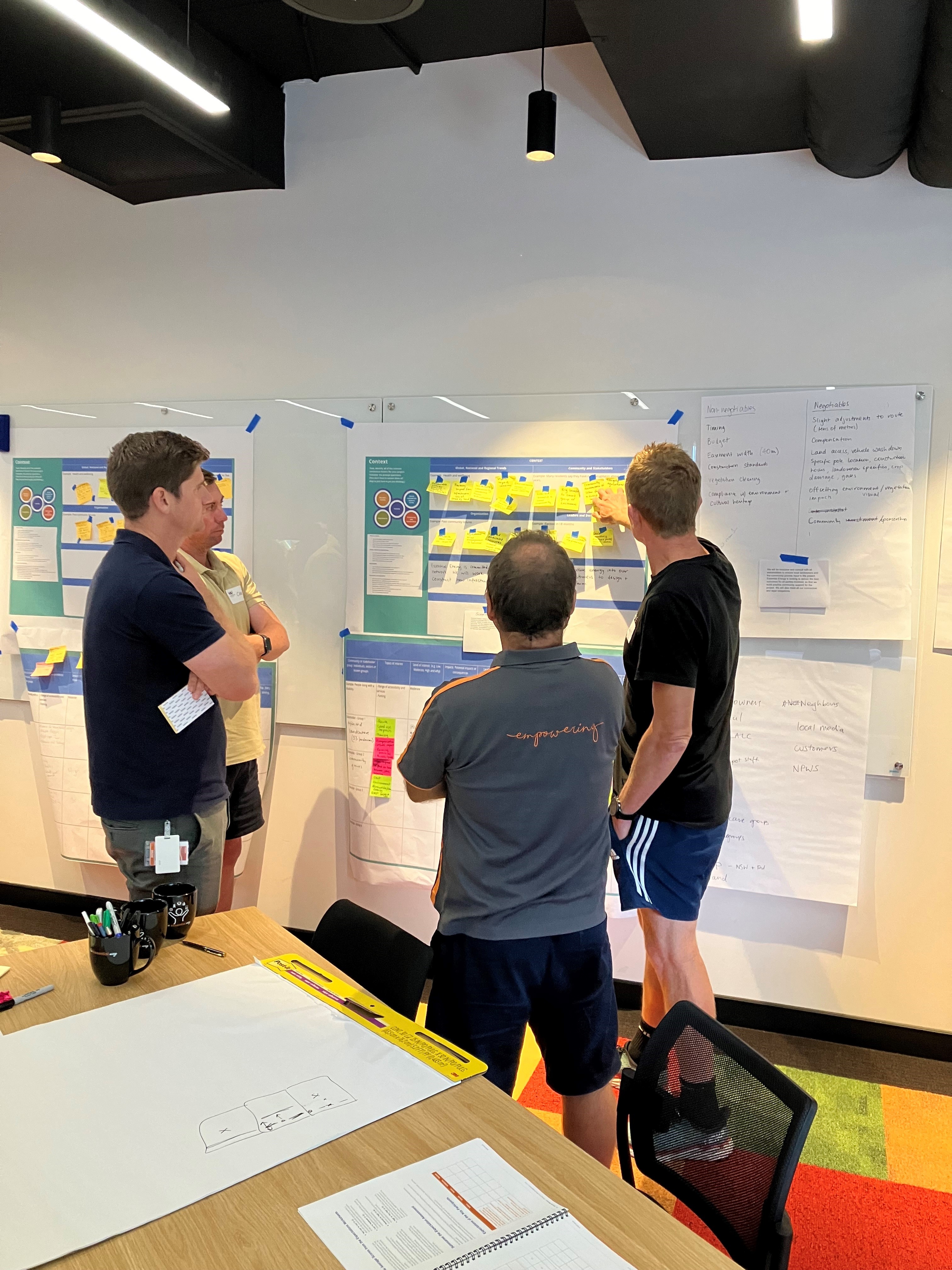
Essential Energy's Stakeholder Engagement Resource Hub is a 'one stop shop' where employees can find Essential Energy's Stakeholder Engagement Framework and supporting tools, templates and useful information to support your engagement activities.

Essential Energy's Stakeholder Engagement Framework (SEF) is regularly refreshed to reflect feedback through consultation, research, changing dynamics of stakeholders and projects and emerging trends and innovation in engagement practices.

Stakeholder Engagement Support

Implementation of the Stakeholder Engagement Framework is supported by guidance from the stakeholder engagement team. Reach out if you would like a helping hand in developing your engagement plan for your project or to discuss ‘engaging’ ideas.

We have created this internal Stakeholder Engagement Resource Hub (Hub) to share templates, tools, reference documents and case studies. This Hub is also a place for employees to share ideas, talk about the different engagement methods and tools being considered, and connect with others working on stakeholder engagement activities.

Our team of Community Relations Managers (CRMs) understand our communities and have trusted relationships with stakeholders in these communities. Get in touch with the CRM before project initiation, to ensure you have the background information and accurate community insights.

The Customer Research team provides customer research & insight support to the business, and if you are thinking about conducting some research then please get in touch. Having visibility of the customer studies taking place across the business allows all of us to be mindful of our impact on customers, and to collaborate and share insight where relevant.

Have you met our First Nations engagement advisors? They are here to provide subject matter expertise to support the business to deliver safe, effective, and culturally sensitive engagement with First Nations peoples and communities. The team also leads the planning, co-ordination and reporting of First Nations engagement activities across the Essential Energy footprint.

Our Stakeholder Engagement Framework is informed by IAP2, an Association that promotes public participation and engagement in decision-making. Essential Energy is a member of IAP2, and as a member you can sign up to receive correspondence from IAP2 and access to online resources. Contact the Stakeholder Engagement team to connect.


IAP2 SPECTRUM OF PUBLIC PARTICIPATION

INFORM

CONSULT

INVOLVE

COLLABORATE

EMPOWER

Goal

To provide the public with balanced and objective information to assist them in understanding the problem, alternatives, opportunities and/or solutions.

To obtain public feedback on analysis, alternatives and/or decisions.

To work directly with the public throughout the process to ensure that public concerns and aspirations are consistently understood and considered.

To partner with the public in each aspect of the decision including the development of alternatives and the identification of the preferred solution.

To place final decision making in the hands of the public.

Promise

“We will keep you informed.”

“We will keep you informed, listen and acknowledge concerns and aspirations, and provide feedback on how public input influenced the decision.”

“We will work with you to ensure that your concerns and aspirations are directly reflected in the alternatives developed and provide feedback on how public input influenced the decision.”

“We will look to you for advice and innovation in formulating solutions and incorporate your advice and recommendations into the decisions to the maximum extent possible.”

“We will implement what you decide.”

Engagement techniques

Examples: factsheets, newsletters, website

Consider: Accessible language, First Nations and CALD

Examples: surveys, meetings

Required: Pre-reading material e.g. Discussion paper or video

Examples: workshops, advisory groups, deep dives

Required: Executive and decision-maker participation. Translate complex docs into plain and easy language or animations

Examples: Deliberative forum, co-design workshop or People’s Panel, Digital Democracy – using Essential Engagement

Required: Skilled facilitator

Examples: Citizen’s juries, independently governed reference groups

Required: Extensive resource commitment for internal and external stakeholders


Essential Energy's Stakeholder Engagement Resource Hub is a 'one stop shop' where employees can find Essential Energy's Stakeholder Engagement Framework and supporting tools, templates and useful information to support your engagement activities.

Essential Energy's Stakeholder Engagement Framework (SEF) is regularly refreshed to reflect feedback through consultation, research, changing dynamics of stakeholders and projects and emerging trends and innovation in engagement practices.
Stakeholder Engagement Support

Implementation of the Stakeholder Engagement Framework is supported by guidance from the stakeholder engagement team. Reach out if you would like a helping hand in developing your engagement plan for your project or to discuss ‘engaging’ ideas.

We have created this internal Stakeholder Engagement Resource Hub (Hub) to share templates, tools, reference documents and case studies. This Hub is also a place for employees to share ideas, talk about the different engagement methods and tools being considered, and connect with others working on stakeholder engagement activities.

Our team of Community Relations Managers (CRMs) understand our communities and have trusted relationships with stakeholders in these communities. Get in touch with the CRM before project initiation, to ensure you have the background information and accurate community insights.

The Customer Research team provides customer research & insight support to the business, and if you are thinking about conducting some research then please get in touch. Having visibility of the customer studies taking place across the business allows all of us to be mindful of our impact on customers, and to collaborate and share insight where relevant.

Have you met our First Nations engagement advisors? They are here to provide subject matter expertise to support the business to deliver safe, effective, and culturally sensitive engagement with First Nations peoples and communities. The team also leads the planning, co-ordination and reporting of First Nations engagement activities across the Essential Energy footprint.

Our Stakeholder Engagement Framework is informed by IAP2, an Association that promotes public participation and engagement in decision-making. Essential Energy is a member of IAP2, and as a member you can sign up to receive correspondence from IAP2 and access to online resources. Contact the Stakeholder Engagement team to connect.


IAP2 SPECTRUM OF PUBLIC PARTICIPATION

INFORM

CONSULT

INVOLVE

COLLABORATE

EMPOWER

Goal

To provide the public with balanced and objective information to assist them in understanding the problem, alternatives, opportunities and/or solutions.

To obtain public feedback on analysis, alternatives and/or decisions.

To work directly with the public throughout the process to ensure that public concerns and aspirations are consistently understood and considered.

To partner with the public in each aspect of the decision including the development of alternatives and the identification of the preferred solution.

To place final decision making in the hands of the public.

Promise

“We will keep you informed.”

“We will keep you informed, listen and acknowledge concerns and aspirations, and provide feedback on how public input influenced the decision.”

“We will work with you to ensure that your concerns and aspirations are directly reflected in the alternatives developed and provide feedback on how public input influenced the decision.”

“We will look to you for advice and innovation in formulating solutions and incorporate your advice and recommendations into the decisions to the maximum extent possible.”

“We will implement what you decide.”

Engagement techniques

Examples: factsheets, newsletters, website

Consider: Accessible language, First Nations and CALD

Examples: surveys, meetings

Required: Pre-reading material e.g. Discussion paper or video

Examples: workshops, advisory groups, deep dives

Required: Executive and decision-maker participation. Translate complex docs into plain and easy language or animations

Examples: Deliberative forum, co-design workshop or People’s Panel, Digital Democracy – using Essential Engagement

Required: Skilled facilitator

Examples: Citizen’s juries, independently governed reference groups

Required: Extensive resource commitment for internal and external stakeholders


Discussions: All (24) Open (24)
  • Together, we power tomorrow

    8 days ago
    Share Together, we power tomorrow on Facebook Share Together, we power tomorrow on Twitter Share Together, we power tomorrow on Linkedin Email Together, we power tomorrow link

    You need to be signed in to add your comment.

    Introducing the Essential Stakeholder Network (ESN)

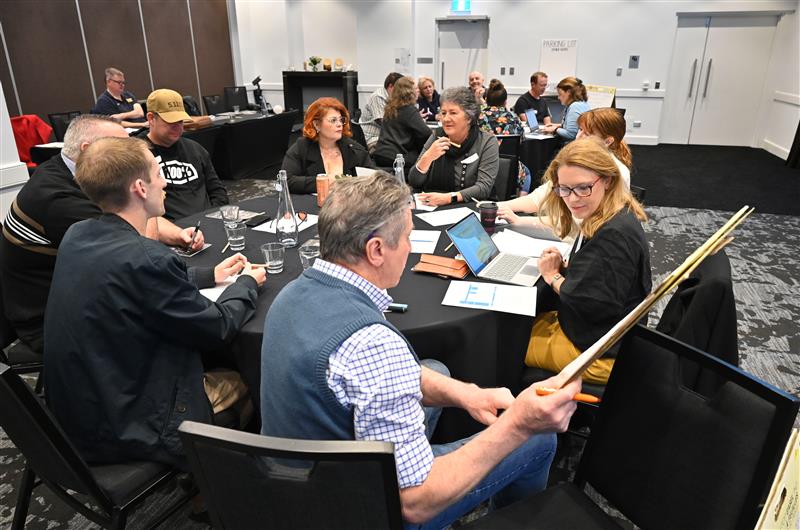
    At Essential Energy, we understand that listening to our customers and stakeholders is crucial to making good business decisions and we want to provide genuine opportunities for people to shape decisions early in the process. That is why we have established the Essential Stakeholder Network (ESN), a network of customer advocates who provide feedback and represent the broad perspectives of our regional, rural and remote customers across NSW.

    The ESN has been created to strengthen our relationships with communities across NSW. It gives us a direct conversation to valuable feedback on the issues that matter most to our diverse customer base, ensuring our business decisions reflect the needs and priorities of the people we serve.

    Reach out to the Stakeholder Relations team to involve the ESN in your decision making process. The ESN can provide insights and feedback into the issues you are deliberating on.

    Conversations leading to change


    Organisation

    Name


    Position

    AusIndustry - Mid North Coast & Northern Inland

    Jill

    Follington

    Regional Manager - Mid North Coast & Northern Inland

    AusIndustry - South West NSW

    Nicola

    James

    Regional Manager - South West NSW

    Business NSW

    Leah

    Tucker

    Senior Policy Manager, Energy and Infrastructure

    Business NSW - Mid North Coast

    Rod

    Barnaby

    Regional Director, Mid North Coast

    Business NSW - New England North West

    Kate

    Nugent

    Strategic Partnerships Manager

    Business NSW - New England North West

    Stephanie

    Cameron

    Regional Director, New England North West

    Business NSW - South Coast

    Paula

    Martin

    Executive Director Regional NSW & Visitor Economy, South Coast

    Caravan and Camping Industry Association of NSW

    Shannon

    Skow

    Head of Policy & Engagement & Company Secretary

    Cabonne Council

    Dion

    Glaze

    Technical Officer Transport

    Carers NSW

    Kavya

    Mohan

    Policy and Research Officer

    Central NSW Joint Organisation 

    Kate

    Barker

    Interim Executive Officer

    Charles Sturt University 

    Simon

    Wright

    Senior Research Fellow, Energy & Circularity

    Clean Energy Council (CEC)

    Con

    Hristodoulidis

    General Manager Distributed Energy

    Country Women’s Association (CWA) NSW

    Joy

    Beams

    Member

    Energy Forever Incorporated - grants program

    Stuart

    Watson

    Chairperson

    Ethnic Communities Council of NSW

    Mary

    Karras

    Chief Executive Officer & Company Secretary

    EWON

    Emma

    Wortley

    Policy & Systemic Issues Officer

    Housing Industry Association (HIA)

    Michael

    Said

    Assistant Director 

    Justice and Equity Centre (JEC)

    Jan

    Kucic-Riker

    Policy Officer, Energy and Water Justice

    Local Government NSW 

    Damian 

    Thomas

    Director Advocacy

    NSW Farmers - Riverina

    Frank

    Galluzzo

    Regional Services Manager

    NSW Parks and Wildlife Regional Advisory Committee 

    Marie

    Russell

    Committee member

    Powering Australia

    Casey

    Kwak

    Networks and Carbon Specialist

    Property Council of Australia

    Ashlee

    Berry

    ACT & Capital Region Executive Director

    Regional Development Australia (RDA) NSW - Mid North Coast

    Madeleine

    Lawler

    CEO and Director of Regional Development

    Regional Development Australia (RDA) NSW - Murray

    Sarimah

    Hellyer

    CEO and Director of Regional Development

    Tenants Union of NSW

    Amanda

    Elgazzar

    Acting Residential Land Lease Communities Officer

    Wagga Wagga City Council

    Carly

    Hood

    Acting Director Community & Environment


    ESN Terms of Reference

    Engagement Topic Template - share this with the stakeholder engagement team for proposed engagement with the ESN

    Introducing the Essential Stakeholder Network (ESN)

    At Essential Energy, we understand that listening to our customers and stakeholders is crucial to making good business decisions and we want to provide genuine opportunities for people to shape decisions early in the process. That is why we have established the Essential Stakeholder Network (ESN), a network of customer advocates who provide feedback and represent the broad perspectives of our regional, rural and remote customers across NSW.

    The ESN has been created to strengthen our relationships with communities across NSW. It gives us a direct conversation to valuable feedback on the issues that matter most to our diverse customer base, ensuring our business decisions reflect the needs and priorities of the people we serve.

    Reach out to the Stakeholder Relations team to involve the ESN in your decision making process. The ESN can provide insights and feedback into the issues you are deliberating on.


    Conversations leading to change


    Organisation

    Name


    Position

    AusIndustry - Mid North Coast & Northern Inland

    Jill

    Follington

    Regional Manager - Mid North Coast & Northern Inland

    AusIndustry - South West NSW

    Nicola

    James

    Regional Manager - South West NSW

    Business NSW

    Leah

    Tucker

    Senior Policy Manager, Energy and Infrastructure

    Business NSW - Mid North Coast

    Rod

    Barnaby

    Regional Director, Mid North Coast

    Business NSW - New England North West

    Kate

    Nugent

    Strategic Partnerships Manager

    Business NSW - New England North West

    Stephanie

    Cameron

    Regional Director, New England North West

    Business NSW - South Coast

    Paula

    Martin

    Executive Director Regional NSW & Visitor Economy, South Coast

    Caravan and Camping Industry Association of NSW

    Shannon

    Skow

    Head of Policy & Engagement & Company Secretary

    Cabonne Council

    Dion

    Glaze

    Technical Officer Transport

    Carers NSW

    Kavya

    Mohan

    Policy and Research Officer

    Central NSW Joint Organisation 

    Kate

    Barker

    Interim Executive Officer

    Charles Sturt University 

    Simon

    Wright

    Senior Research Fellow, Energy & Circularity

    Clean Energy Council (CEC)

    Con

    Hristodoulidis

    General Manager Distributed Energy

    Country Women’s Association (CWA) NSW

    Joy

    Beams

    Member

    Energy Forever Incorporated - grants program

    Stuart

    Watson

    Chairperson

    Ethnic Communities Council of NSW

    Mary

    Karras

    Chief Executive Officer & Company Secretary

    EWON

    Emma

    Wortley

    Policy & Systemic Issues Officer

    Housing Industry Association (HIA)

    Michael

    Said

    Assistant Director 

    Justice and Equity Centre (JEC)

    Jan

    Kucic-Riker

    Policy Officer, Energy and Water Justice

    Local Government NSW 

    Damian 

    Thomas

    Director Advocacy

    NSW Farmers - Riverina

    Frank

    Galluzzo

    Regional Services Manager

    NSW Parks and Wildlife Regional Advisory Committee 

    Marie

    Russell

    Committee member

    Powering Australia

    Casey

    Kwak

    Networks and Carbon Specialist

    Property Council of Australia

    Ashlee

    Berry

    ACT & Capital Region Executive Director

    Regional Development Australia (RDA) NSW - Mid North Coast

    Madeleine

    Lawler

    CEO and Director of Regional Development

    Regional Development Australia (RDA) NSW - Murray

    Sarimah

    Hellyer

    CEO and Director of Regional Development

    Tenants Union of NSW

    Amanda

    Elgazzar

    Acting Residential Land Lease Communities Officer

    Wagga Wagga City Council

    Carly

    Hood

    Acting Director Community & Environment


    ESN Terms of Reference

    Engagement Topic Template - share this with the stakeholder engagement team for proposed engagement with the ESN

  • Stakeholder Map - time to review and refresh

    4 months ago
    Share Stakeholder Map - time to review and refresh on Facebook Share Stakeholder Map - time to review and refresh on Twitter Share Stakeholder Map - time to review and refresh on Linkedin Email Stakeholder Map - time to review and refresh link

    You need to be signed in to add your comment.

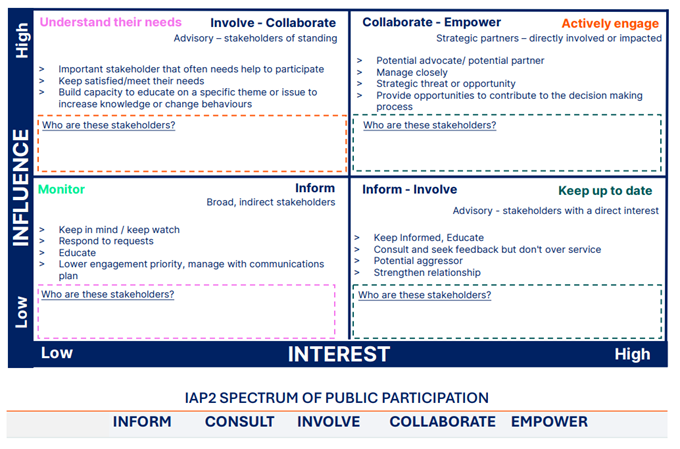
    The Stakeholder Map reflects the external stakeholder landscape and who within our business is managing these important relationships.

    Why review now?

    • Stakeholder relationships are dynamic. Projects evolve, new partnerships form, and priorities shift. Regular review ensures our stakeholder analysis remains accurate and relevant.
    • Your input matters. You are closest to many of these relationships and can identify changes, new contacts, or emerging issues that should be reflected.
    • Strategic alignment. Up-to-date stakeholder information helps us manage risks, seize opportunities, and deliver on our commitments.

    Your input needed:

    • Review the latest Stakeholder Matrix and Map in the Resource Hub.
    • Advise the Stakeholder Engagement team of any updates, corrections, or new stakeholders.
    • Share your insights on emerging trends, new contacts, or changes in stakeholder priorities.


    The Stakeholder Map reflects the external stakeholder landscape and who within our business is managing these important relationships.

    Why review now?

    • Stakeholder relationships are dynamic. Projects evolve, new partnerships form, and priorities shift. Regular review ensures our stakeholder analysis remains accurate and relevant.
    • Your input matters. You are closest to many of these relationships and can identify changes, new contacts, or emerging issues that should be reflected.
    • Strategic alignment. Up-to-date stakeholder information helps us manage risks, seize opportunities, and deliver on our commitments.

    Your input needed:

    • Review the latest Stakeholder Matrix and Map in the Resource Hub.
    • Advise the Stakeholder Engagement team of any updates, corrections, or new stakeholders.
    • Share your insights on emerging trends, new contacts, or changes in stakeholder priorities.


  • Gaining insights and skills to engage with customers, partners, stakeholders and community.

    4 months ago
    Share Gaining insights and skills to engage with customers, partners, stakeholders and community. on Facebook Share Gaining insights and skills to engage with customers, partners, stakeholders and community. on Twitter Share Gaining insights and skills to engage with customers, partners, stakeholders and community. on Linkedin Email Gaining insights and skills to engage with customers, partners, stakeholders and community. link

    You need to be signed in to add your comment.

    As an organisation that values genuine engagement, we offer in-house engagement training. This training follows the International Association for Public Participation Australasia (IAP2) framework. 

    IAP2 is recognised as the peak body for engagement, providing education and training courses in community engagement, and leadership within the engagement industry.    

    This is a great opportunity for you, as the training will benefit many areas of your work, and if you participate in the first three training modules you walk away with an internationally recognised certificate.  

    The training will be delivered face-to-face in Port Macquarie.

    DATES for 2026:

    • Essentials of Engagement: Tuesday, 24 February 2026
    • Apply Engagement Methods: Wednesday, 25 and Thursday 26, February 2026
    • Design and Plan Engagement: Tuesday, 10 and Wednesday, 11 March 2026

    Please get in touch with Karyn Looby to find out more and advise your interest to participate. 
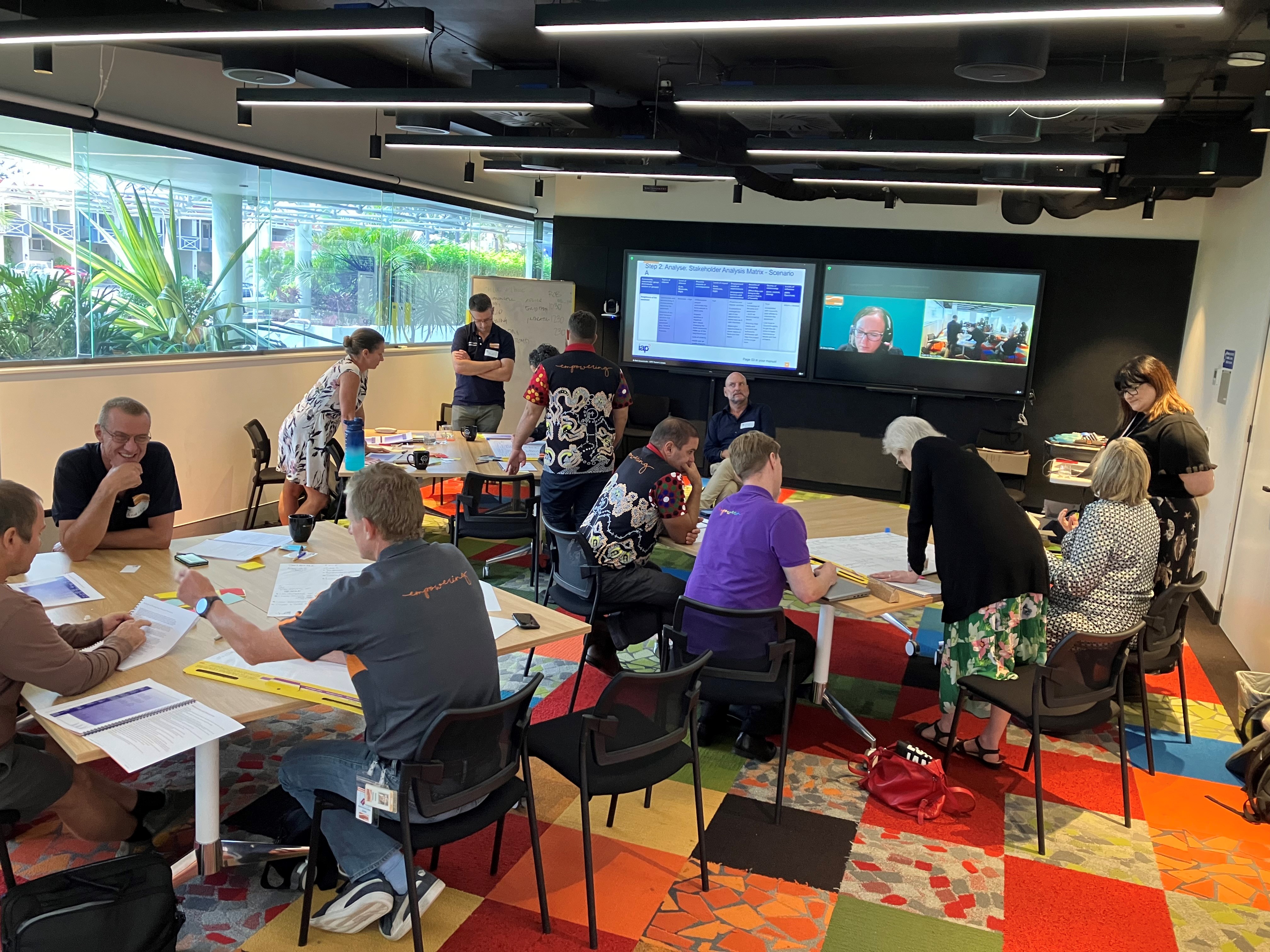


    As an organisation that values genuine engagement, we offer in-house engagement training. This training follows the International Association for Public Participation Australasia (IAP2) framework. 

    IAP2 is recognised as the peak body for engagement, providing education and training courses in community engagement, and leadership within the engagement industry.    

    This is a great opportunity for you, as the training will benefit many areas of your work, and if you participate in the first three training modules you walk away with an internationally recognised certificate.  

    The training will be delivered face-to-face in Port Macquarie.

    DATES for 2026:

    • Essentials of Engagement: Tuesday, 24 February 2026
    • Apply Engagement Methods: Wednesday, 25 and Thursday 26, February 2026
    • Design and Plan Engagement: Tuesday, 10 and Wednesday, 11 March 2026

    Please get in touch with Karyn Looby to find out more and advise your interest to participate. 


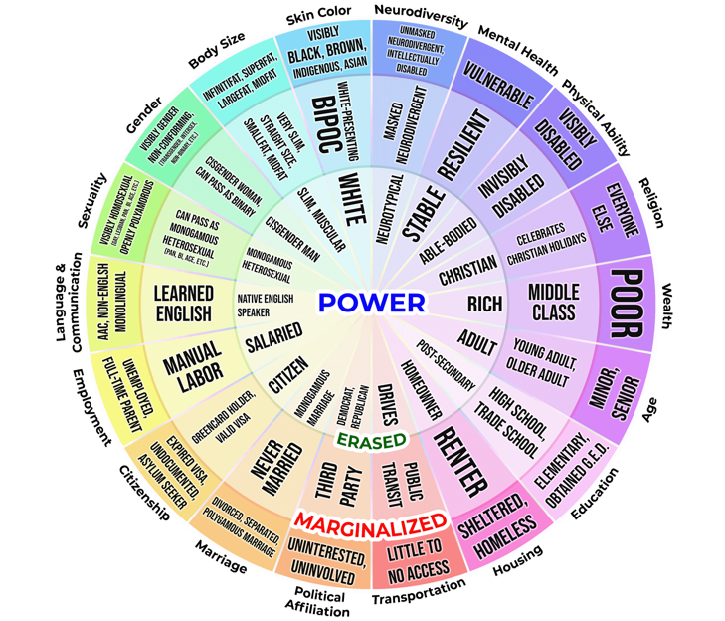
  • The Wheel of Power, Privilege, and Marginalisation (Sylvia Duckworth, 2021)

    5 months ago
    Share The Wheel of Power, Privilege, and Marginalisation (Sylvia Duckworth, 2021) on Facebook Share The Wheel of Power, Privilege, and Marginalisation (Sylvia Duckworth, 2021) on Twitter Share The Wheel of Power, Privilege, and Marginalisation (Sylvia Duckworth, 2021) on Linkedin Email The Wheel of Power, Privilege, and Marginalisation (Sylvia Duckworth, 2021) link
    You need to be signed in to add your comment.

    A reminder of not only listening to the loudest voices; and someone with lived experience may sit across a few of these ‘pieces of the pie’.

    A reminder of not only listening to the loudest voices; and someone with lived experience may sit across a few of these ‘pieces of the pie’.

  • Enhancing Stakeholder Engagement: Key Takeaways from Landholder engagement training

    over 1 year ago
    Share Enhancing Stakeholder Engagement: Key Takeaways from Landholder engagement training on Facebook Share Enhancing Stakeholder Engagement: Key Takeaways from Landholder engagement training on Twitter Share Enhancing Stakeholder Engagement: Key Takeaways from Landholder engagement training on Linkedin Email Enhancing Stakeholder Engagement: Key Takeaways from Landholder engagement training link

    You need to be signed in to add your comment.

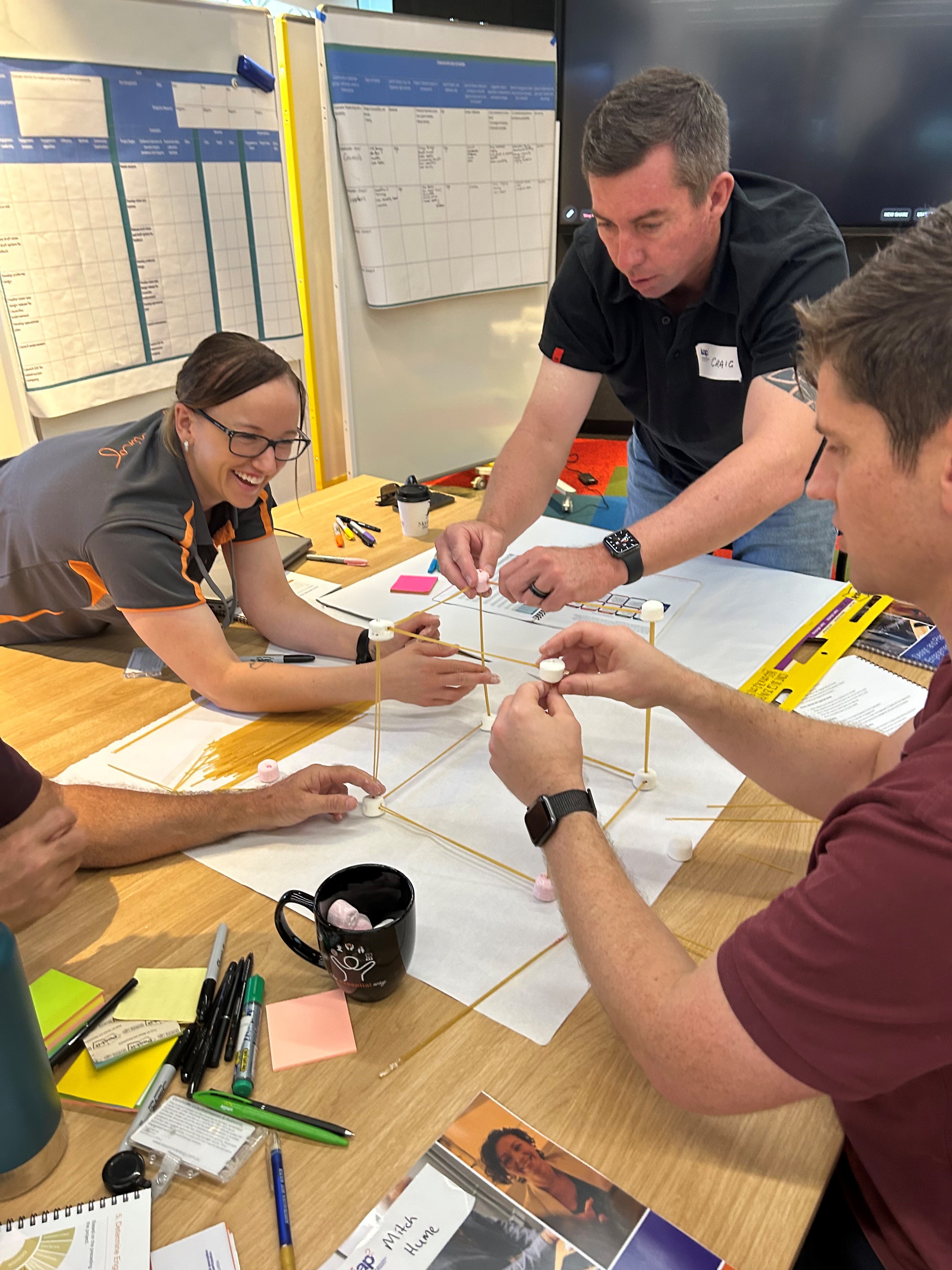
    Colleagues attended engagement training in Wagga Wagga, organised by the Energy Charter. They listened first-hand to landholders about successes and areas needing improvement and spent a full day delving into community concerns and best practices for communication and engagement.

    Here are some key learnings they have shared:

    Empathy and Understanding: It's crucial to be empathetic and understand stakeholders' practices and challenges. This is especially important when engaging with landowners and understanding the impact of infrastructure on their work and property.

    Proactive and Genuine Engagement: Engage with stakeholders genuinely and patiently. Open, honest conversations and acting on feedback are essential.

    Two-Way Communication: Establishing and maintaining trust through effective two-way communication is vital for successful project delivery.

    Conflict Resolution: Knowing techniques for conflict resolution and collaborative problem-solving is essential. Projects often face common issues such as trust, finances, and impact on farms.

    Early Involvement of Technical Experts: Involve technical experts early in the process and avoid premature compensation discussions to prevent perceptions of bribery.

    Let's continue to build stronger communities and foster positive relationships through effective stakeholder engagement!

    A huge thank you to the following people for providing this feedback:

    Damian Munday        Melinda White        Brett Day             Glen Faganello     

    Josh Galloway           Mitch Hume            Peter Wilson



    Colleagues attended engagement training in Wagga Wagga, organised by the Energy Charter. They listened first-hand to landholders about successes and areas needing improvement and spent a full day delving into community concerns and best practices for communication and engagement.

    Here are some key learnings they have shared:

    Empathy and Understanding: It's crucial to be empathetic and understand stakeholders' practices and challenges. This is especially important when engaging with landowners and understanding the impact of infrastructure on their work and property.

    Proactive and Genuine Engagement: Engage with stakeholders genuinely and patiently. Open, honest conversations and acting on feedback are essential.

    Two-Way Communication: Establishing and maintaining trust through effective two-way communication is vital for successful project delivery.

    Conflict Resolution: Knowing techniques for conflict resolution and collaborative problem-solving is essential. Projects often face common issues such as trust, finances, and impact on farms.

    Early Involvement of Technical Experts: Involve technical experts early in the process and avoid premature compensation discussions to prevent perceptions of bribery.

    Let's continue to build stronger communities and foster positive relationships through effective stakeholder engagement!

    A huge thank you to the following people for providing this feedback:

    Damian Munday        Melinda White        Brett Day             Glen Faganello     

    Josh Galloway           Mitch Hume            Peter Wilson


  • Build your skills to make the most out of Essential Engagement [Engagement HQ]

    over 1 year ago
    Share Build your skills to make the most out of Essential Engagement [Engagement HQ] on Facebook Share Build your skills to make the most out of Essential Engagement [Engagement HQ] on Twitter Share Build your skills to make the most out of Essential Engagement [Engagement HQ] on Linkedin Email Build your skills to make the most out of Essential Engagement [Engagement HQ] link

    You need to be signed in to add your comment.

    Training available to you


    Granicus University is an excellent resource we can use to learn more about how to make the most out of the platform and benefit your engagement projects. 

    Attendees are required to register for the upcoming sessions through the Granicus Learning Hub. You have access to on demand webinars and live webinars to best fit with your schedule and preferences. Here is a quick video showing how to sign up for both. Please remember to update your time zone when you first log in. 

    Training available to you


    Granicus University is an excellent resource we can use to learn more about how to make the most out of the platform and benefit your engagement projects. 

    Attendees are required to register for the upcoming sessions through the Granicus Learning Hub. You have access to on demand webinars and live webinars to best fit with your schedule and preferences. Here is a quick video showing how to sign up for both. Please remember to update your time zone when you first log in. 

  • Engagement plans - an essential tool for project success

    over 1 year ago
    Share Engagement plans - an essential tool for project success on Facebook Share Engagement plans - an essential tool for project success on Twitter Share Engagement plans - an essential tool for project success on Linkedin Email Engagement plans - an essential tool for project success link

    You need to be signed in to add your comment.

    An engagement plan is a working document and should be regularly updated as the project progresses. As an engagement lead for the project, it is your role to develop and implement the engagement plan, in collaboration with the project team and external stakeholders. It is your 'source of truth' and guides you in your day-to-day activities. 

    Here is an Engagement Plan template. It offers guidance on what to include in your engagement plan, but feel free to personalise it. The plan does not need to match the template exactly; it should be something practical for you to use regularly. You can use the Engagement Planning Toolkit to build your plan.

    Here's an Engagement Plan being delivered by the Tibooburra Smart Energy's Communities project team. 


    An engagement plan is a working document and should be regularly updated as the project progresses. As an engagement lead for the project, it is your role to develop and implement the engagement plan, in collaboration with the project team and external stakeholders. It is your 'source of truth' and guides you in your day-to-day activities. 

    Here is an Engagement Plan template. It offers guidance on what to include in your engagement plan, but feel free to personalise it. The plan does not need to match the template exactly; it should be something practical for you to use regularly. You can use the Engagement Planning Toolkit to build your plan.

    Here's an Engagement Plan being delivered by the Tibooburra Smart Energy's Communities project team. 


  • Evaluating your customer and stakeholder engagement

    about 2 years ago
    Share Evaluating your customer and stakeholder engagement on Facebook Share Evaluating your customer and stakeholder engagement on Twitter Share Evaluating your customer and stakeholder engagement on Linkedin Email Evaluating your customer and stakeholder engagement link

    You need to be signed in to add your comment.

    IAP2 has developed the Quality Assurance Standard (QAS) which is a really great tool to assess how well you are delivering your engagement program.

    The QAS should be reviewed at each phase of your engagement program, so you can look for gaps and make the necessary changes to your engagement program along the way. 


    IAP2 has developed the Quality Assurance Standard (QAS) which is a really great tool to assess how well you are delivering your engagement program.

    The QAS should be reviewed at each phase of your engagement program, so you can look for gaps and make the necessary changes to your engagement program along the way. 


  • Report: Disaster Planning and Recovery Collaborative Research Project

    about 2 years ago
    Share Report: Disaster Planning and Recovery Collaborative Research Project on Facebook Share Report: Disaster Planning and Recovery Collaborative Research Project on Twitter Share Report: Disaster Planning and Recovery Collaborative Research Project on Linkedin Email Report: Disaster Planning and Recovery Collaborative Research Project link

    You need to be signed in to add your comment.

    Thriving Communities Partnership, together with Symplicit, Energy Queensland and Suncorp, have shared research which identifies opportunities that are tangible and actionable - from preparedness through to long-term recovery and resilience. 

    This project recognises the complexity and interconnectivity of the ecosystem we live in, and the need for organisations to work collectively, rather than individually, to support people in our community when they face challenging times.  

    By mapping the experiences of community members and local businesses in Townsville impacted by the 2019 North Queensland Monsoon disaster, this research report identifies insights into the barriers, challenges and pain points experienced when interacting with organisations. The research findings create a collective community voice and are represented by two end-to-end journeys uncovered in the research: 

    Residential and Whole-of-Community Insights:

    • Communications across the journey influence response and recovery 
    • Connections and community networks are key 
    • There is a need for universal design 
    • Electricity is a gatekeeper during a disaster 
    • Recovery is often a ‘financial maze’ for residents 
    • Flexibility within the system supports individual resilience 
    • Trauma and mental health can subconsciously be deprioritised 

    Small and Medium Size Business Insights:

    • The employer is a pillar in the community 
    • Family safety is the priority 
    • There is an aversion to accepting ‘charity’ 
    • Business insurance was a pain point for many 
    • Government grants and support are a welcome relief, but there was some red tape 
    • Macroeconomics influence community resilience 

    Thriving Communities Partnership, together with Symplicit, Energy Queensland and Suncorp, have shared research which identifies opportunities that are tangible and actionable - from preparedness through to long-term recovery and resilience. 

    This project recognises the complexity and interconnectivity of the ecosystem we live in, and the need for organisations to work collectively, rather than individually, to support people in our community when they face challenging times.  

    By mapping the experiences of community members and local businesses in Townsville impacted by the 2019 North Queensland Monsoon disaster, this research report identifies insights into the barriers, challenges and pain points experienced when interacting with organisations. The research findings create a collective community voice and are represented by two end-to-end journeys uncovered in the research: 

    Residential and Whole-of-Community Insights:

    • Communications across the journey influence response and recovery 
    • Connections and community networks are key 
    • There is a need for universal design 
    • Electricity is a gatekeeper during a disaster 
    • Recovery is often a ‘financial maze’ for residents 
    • Flexibility within the system supports individual resilience 
    • Trauma and mental health can subconsciously be deprioritised 

    Small and Medium Size Business Insights:

    • The employer is a pillar in the community 
    • Family safety is the priority 
    • There is an aversion to accepting ‘charity’ 
    • Business insurance was a pain point for many 
    • Government grants and support are a welcome relief, but there was some red tape 
    • Macroeconomics influence community resilience 

  • Why engage with our customers and communities?

    about 2 years ago
    Share Why engage with our customers and communities? on Facebook Share Why engage with our customers and communities? on Twitter Share Why engage with our customers and communities? on Linkedin Email Why engage with our customers and communities? link

    You need to be signed in to add your comment.

    An initiative of The Energy Charter Better Together Know Your Customers and Communities

    1. Why do we listen to customers?

    All energy businesses are here to serve our customers and communities. Put simply, without customers (whether they are residential, small & medium business, or large commercial & industrial) we would not have our business. To deliver our energy products and services in a way that meets our customer and community needs and expectations, we first need to understand: what are those needs and expectations?

    That’s why engaging with our customers, consumers and communities is essential.

    2. What’s this got to do with me?

    Maybe you’re a network engineer, a planner or a marketing manager and you’re thinking, what’s this got to do with me? It’s easy to think that engaging with customers and communities is the job of those in our business who interact with them every day. Maybe you’ve even got a dedicated team of Stakeholder Relations or Community Relations folk.

    Well, the good news is that the more people in our business that speak to our customers and communities, the better we will be. If you haven’t yet had the opportunity to genuinely engage with our customers and community you will be surprised at what a rewarding experience it can be, and how it may help you do your job better!

    That’s because speaking to customers and communities gives us all the opportunity to understand:

    • Who is using our energy products and services and who else might benefit from them?
    • Why are they using them and how and where they are being used?
    • How can our energy products and services be improved?
    • Do our energy products and services meet future needs and expectations?
    • How is a community impacted by our activities and is there shared value for all?

    3. Supporting you

    There are people in our organisation that can share opportunities to engage with our customers and communities and support you in doing so. There’s also a Stakeholder Engagement Framework that can give you some tips.

    We’d encourage you to contact the following people if you want more information:

    Karyn Looby, Stakeholder Engagement Specialist

    4. Finally… share the feedback!

    Remember to share the insights across your organisation!

    Often people are being asked similar questions from different people across our organisation, or information gained from a conversation in one area of our organisation can benefit someone else in another area.

    An initiative of The Energy Charter Better Together Know Your Customers and Communities

    1. Why do we listen to customers?

    All energy businesses are here to serve our customers and communities. Put simply, without customers (whether they are residential, small & medium business, or large commercial & industrial) we would not have our business. To deliver our energy products and services in a way that meets our customer and community needs and expectations, we first need to understand: what are those needs and expectations?

    That’s why engaging with our customers, consumers and communities is essential.

    2. What’s this got to do with me?

    Maybe you’re a network engineer, a planner or a marketing manager and you’re thinking, what’s this got to do with me? It’s easy to think that engaging with customers and communities is the job of those in our business who interact with them every day. Maybe you’ve even got a dedicated team of Stakeholder Relations or Community Relations folk.

    Well, the good news is that the more people in our business that speak to our customers and communities, the better we will be. If you haven’t yet had the opportunity to genuinely engage with our customers and community you will be surprised at what a rewarding experience it can be, and how it may help you do your job better!

    That’s because speaking to customers and communities gives us all the opportunity to understand:

    • Who is using our energy products and services and who else might benefit from them?
    • Why are they using them and how and where they are being used?
    • How can our energy products and services be improved?
    • Do our energy products and services meet future needs and expectations?
    • How is a community impacted by our activities and is there shared value for all?

    3. Supporting you

    There are people in our organisation that can share opportunities to engage with our customers and communities and support you in doing so. There’s also a Stakeholder Engagement Framework that can give you some tips.

    We’d encourage you to contact the following people if you want more information:

    Karyn Looby, Stakeholder Engagement Specialist

    4. Finally… share the feedback!

    Remember to share the insights across your organisation!

    Often people are being asked similar questions from different people across our organisation, or information gained from a conversation in one area of our organisation can benefit someone else in another area.

Page last updated: 30 Mar 2026, 10:25 AM